📅2023.08.30 - 🇺🇸✏️영문 필사와 한 줄 메모
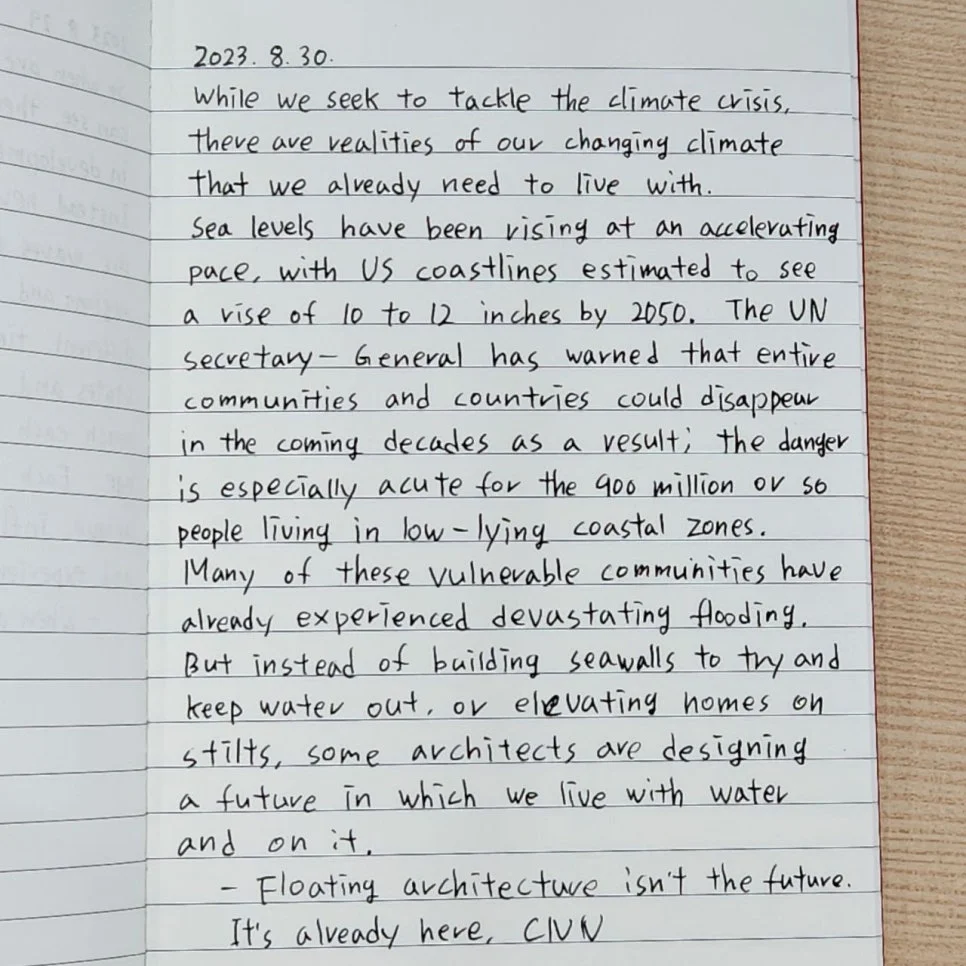
While we seek to tackle the climate crisis, there are realities of our changing climate that we already need to live with.
Sea levels have been rising at an accelerating pace, with US coastlines estimated to see a rise of 10 to 12 inches by 2050.
The UN Secretary-General has warned that entire communities and countries could disappear in the coming decades as a result; the danger is especially acute for the 900 million or so people living in low-lying coastal zones.
Many of these vulnerable communities have already experienced devastating flooding.
But instead of building seawalls to try and keep water out, or elevating homes on stilts, some architects are designing a future in which we live with water — and on it.
— ― Floating architecture isn’t the future. It’s already here, CNN
📚단어노트
tackle : (힘든 상황들과) 씨름하다,
vulnerable : 취약한, 연약한, 상처에 취약하다
✔해석
우리가 기후 위기에 대처하려고 노력하는 동안 이미 우리 삶에 다가온 기후 변화의 현실들이 있다.
미국의 해안선들은 2050년 까지 10에서 12인치의 상승을 보일 것으로 추정되면서 해수면은 빠른 속도로 상승하고 있다.
유엔 사무총장은 그 결과로 앞으로 수십 년 안에 전체 공동체와 국가들이 사라질 수 있다고 경고한다.
그 위험은 해안 저지대에 살고 있는 약 9억 명의 사람들에게 특히 극심하다.
이러한 취약한 지역사회들 중 많은 곳이 이미 파괴적인 홍수를 경험했다.
하지만 일부 건축가들은 물을 막기 위해 방파제를 만들거나 기둥 위에 집을 높이는 대신 우리가 물과 함께 사는 미래를 설계하고 있다.
- 플로팅 건축은 미래가 아니다, 이미 현실이다
📑나의 한 마디
이미 늦었다. 돌이킬 수 없다.
기후 변화를 우리는 맞이해야 하고 대비해야 한다.
막기 위해서는? 가시 원시시대로 돌아가는 것 그 방법 밖에 없다.
지구상의 모든 인간들이 동시에 시작해야한다.
 Floating architecture isn’t the future. It’s already here | CNNWith sea levels rising at an increasing rate, architects are already designing a future in which we live with water — and on it.edition.cnn.com
#하루15분영문필사모임 #영문필사 #문장수집 #영감노트 #영감수집 #LlifelogBlog #라이프로그블로그
#인생 #삶 #기후위기 #기후변화
공유
댓글
아직 댓글이 없습니다. 첫 번째 댓글을 남겨보세요.